One of the most common categorizations of Graphics Cards or GPUs is based on their pricing and performance. Graphics Cards come in all price ranges and performance levels to cater to consumers with different budgets and requirements. For example, users with no budget issues generally buy the most powerful and costly graphics cards, while users with budget constraints opt for a cheaper graphics card that is powerful enough to run most games at moderate graphics quality, delivering respectable frame rates. At a general level, Graphics Cards (GPUs) are classified into entry-level, budget, mid-range, high-end, and flagship categories. In this post, I will explain the differences between them so that you won’t get confused when you hear these terms associated with any graphics card.
GPU Series or Generation
The Series or Generation of a GPU is a way to classify graphics cards based on their GPU architecture. It means graphics cards in a particular GPU series use the same GPU architecture and naming convention. For example, the GeForce RTX 50 series from Nvidia uses the Blackwell GPU architecture, the GeForce RTX 40 series uses the Ada Lovelace GPU architecture, the Radeon RX 9000 series from AMD is based on the RDNA 4 GPU architecture, the Radeon RX 7000 series is based on the RDNA 3 GPU architecture, and so on. The graphics cards, or GPUs, at the top of the series are the most powerful and expensive. In contrast, the one at the lowest point in the series is the least powerful and has the lowest price within that series, e.g., in the Nvidia RTX GeForce 40 series, the RTX 4090 is at the top, while the RTX 4060 is at the bottom.
Important Note: Not all graphics card series offer entry-level or budget options, and some series do not even have a high-end option. For example, the Nvidia GeForce RTX 40 series does not include entry-level and budget graphics cards, and the Nvidia GeForce GTX 16 series does not feature high-end graphics cards.
Entry-Level Graphics Cards
Entry-level graphics cards are the least powerful and the cheapest. These graphics cards occupy the lowest position in a particular graphics card series. Modern entry-level graphics cards can have up to 4GB of Video Memory (VRAM) and are not intended for playing AAA games, though some can run older games at low to medium graphics settings smoothly. These cards are best suited for other purposes, including setting up multiple monitors, as a secondary display card, for HTPC use, troubleshooting, or use in older PCs or systems.
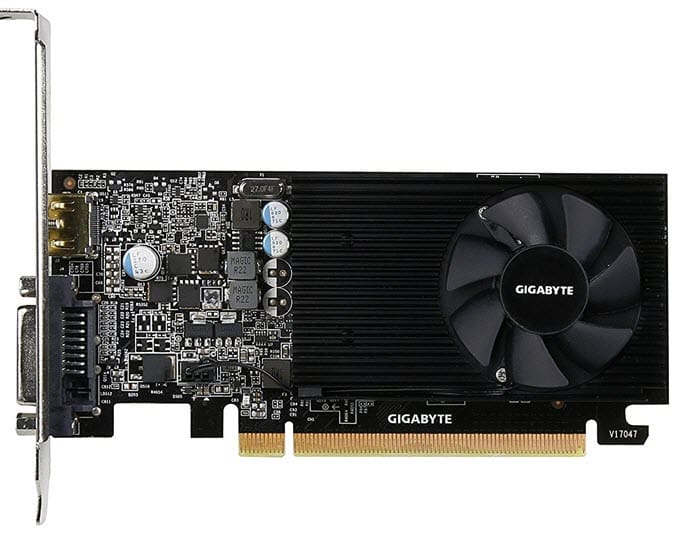
Most entry-level graphics cards come with basic single-fan coolers, and some are passively cooled. These cards are compact and mostly feature a single-slot and low-profile design. They have very low power consumption and draw power from the PCIe x16 slot. Some examples of modern-day entry-level graphics cards from Nvidia and AMD include the Nvidia GeForce GT 1030 and the AMD Radeon RX 550.
Budget Graphics Cards
Budget Graphics Cards are way more powerful than entry-level graphics cards and are positioned above them in the GPU series. These cards cater to buyers with budget constraints who want to build a fairly powerful PC with a mid-range processor. Modern-day budget graphics cards are powerful enough to play the latest AAA games at 1080p on low to medium graphics settings, with respectable frame rates of 40 to 50 FPS. These graphics cards are also known as mainstream graphics cards, and they sell in huge numbers.
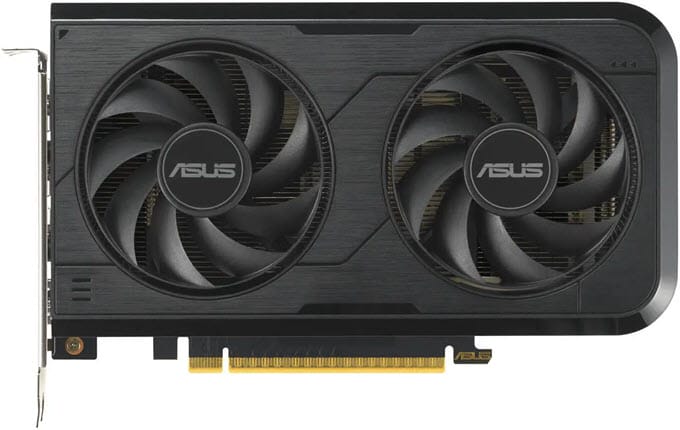
Modern-day budget graphics cards can have up to 8GB of VRAM and come with a decent cooler, featuring up to two fans. These cards are compact and available in single- or dual-slot designs. They also have low power consumption and may require a supplementary 6-pin or 8-pin PCIe power connector, depending on the card’s power draw and the GPU used. These cards cost more than entry-level graphics cards, yet they are still quite affordable. These graphics cards are used in budget gaming PCs, budget workstations, servers, HTPCs, and general-purpose workstations. Some examples of budget graphics cards include the Nvidia GeForce GTX 1650, GeForce GTX 1660 SUPER, and GeForce RTX 3050.
Mid-range Graphics Cards
The mid-range graphics card segment is quite broad and can be further categorized into budget mid-range and higher mid-range graphics cards. The position of mid-range graphics cards lies in the middle range of the GPU series or lineup. Mid-range graphics cards offer the best balance between price and performance. These graphics cards are powerful and offer significantly better performance than budget graphics cards. Mid-range graphics cards are preferred for playing AAA games at high or highest graphics settings at 1080p and 1440p resolution. These graphics cards come with medium to big coolers with dual or triple fans.
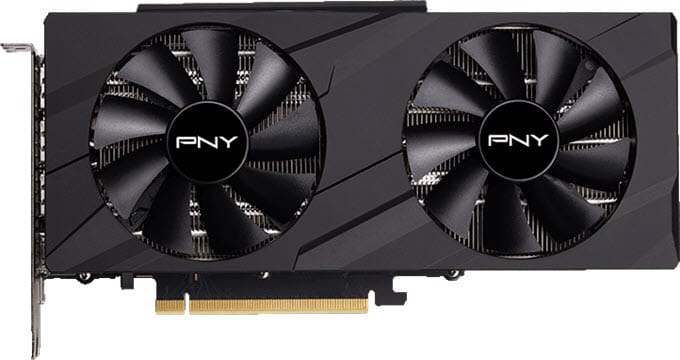
Mid-range cards are larger than budget graphics cards and feature a dual-slot to triple-slot design. They can have up to 16GB of VRAM, depending on the GPU model. The cards have medium to high power consumption, and they come with 8-pin PCIe or 12VHPWR connectors for supplementary power. Mid-range budget graphics cards are less expensive and less powerful than higher-end mid-range cards. Examples of mid-range budget graphics cards include the Nvidia GeForce RTX 4060, RTX 5060, and Radeon RX 7600. Higher mid-range graphics cards include the GeForce RTX 4060 Ti, RTX 5060 Ti, Radeon RX 7600 XT, and Radeon RX 7700 XT.
High-end Graphics Cards
High-end Graphics Cards are the most powerful in a graphics card series or lineup. These graphics cards offer excellent performance and are best suited for playing the latest AAA games at the highest graphics settings on 1440p and 4K resolutions. These graphics cards come with large, dual- or triple-fan coolers and higher power consumption. High-end graphics cards use two or three 8-pin PCIe connectors or a 12VHPWR / 12V-2×6 connector for additional power.
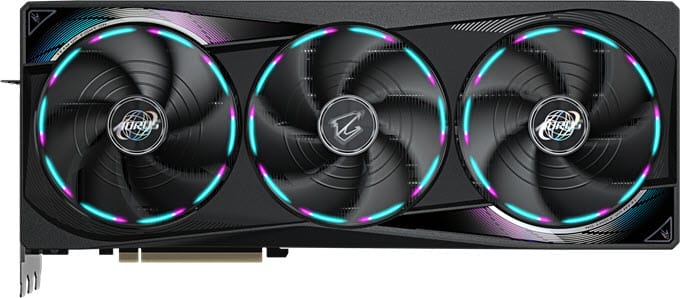
High-end Graphics Cards are big in size and have dual-slot to triple-slot (or higher) designs. The cards come with all the latest features and are primarily used in high-end gaming PCs and powerful workstations.
Flagship Graphics Cards – The high-end graphics cards that sit at the top of a GPU series are the flagship graphics cards. These are very powerful graphics cards and are pretty expensive. These cards can have up to 24GB of VRAM and much higher power consumption.
| Entry-Level Graphics Cards | Budget Graphics Cards | Mid-range Graphics Cards | High-end Graphics Cards | |
| Position in Generation /
Series |
Lowest | Low | Middle | High and Topmost |
| Performance | Very Low | Average or Fair | Very Good | Excellent |
| Cooler | Basic Cooler with Single Fan / Passive Cooler | Decent Cooler to Single to Dual Fans | Good Cooler to Single to Triple Fans | Very Good Cooler with Dual to Triple Fans |
| Form Factor / Size | Mostly Single Slot | Single Slot to Dual Slot | Dual Slot to Triple Slot | Dual Slot, Triple Slot, and Quad-Slot |
| Power Consumption | Very Low | Low | Medium | High |
| Features | Less | Basic | Advanced | Advanced |
| Price | Lowest | Low | Medium | High |
| Primary Usage / Applications | HTPC, Multi-monitor Setup, for Primary Display, | HTPC, Budget Gaming PCs | Mainstream or Mid-range Gaming PC, Workstation | High-end Gaming PCs and Workstations |
Impact of Generation or Series on GPU Performance
The impact of the GPU series on graphics card performance is significant. For example, budget or mid-range graphics cards in the latest GPU series are more powerful than those in older generations. A mid-range graphics card in the newest series is generally more powerful than a high-end graphics card in the older series. For example, the GeForce RTX 4070, a mid-range graphics card from the GeForce RTX 40 series, is more powerful than the GeForce RTX 3070 from the GeForce RTX 30 series and the GeForce RTX 2080 from the RTX 20 series, but offers the same level of performance as the GeForce RTX 3080, a high-end RTX 30 series graphics card.
Queries?
If you need help with graphics cards, please let me know your queries in the comments below.
(*This post may contain affiliate links, which means I may receive a small commission if you choose to purchase through the links I provide (at no extra cost to you). Thank you for supporting the work I put into this site!)